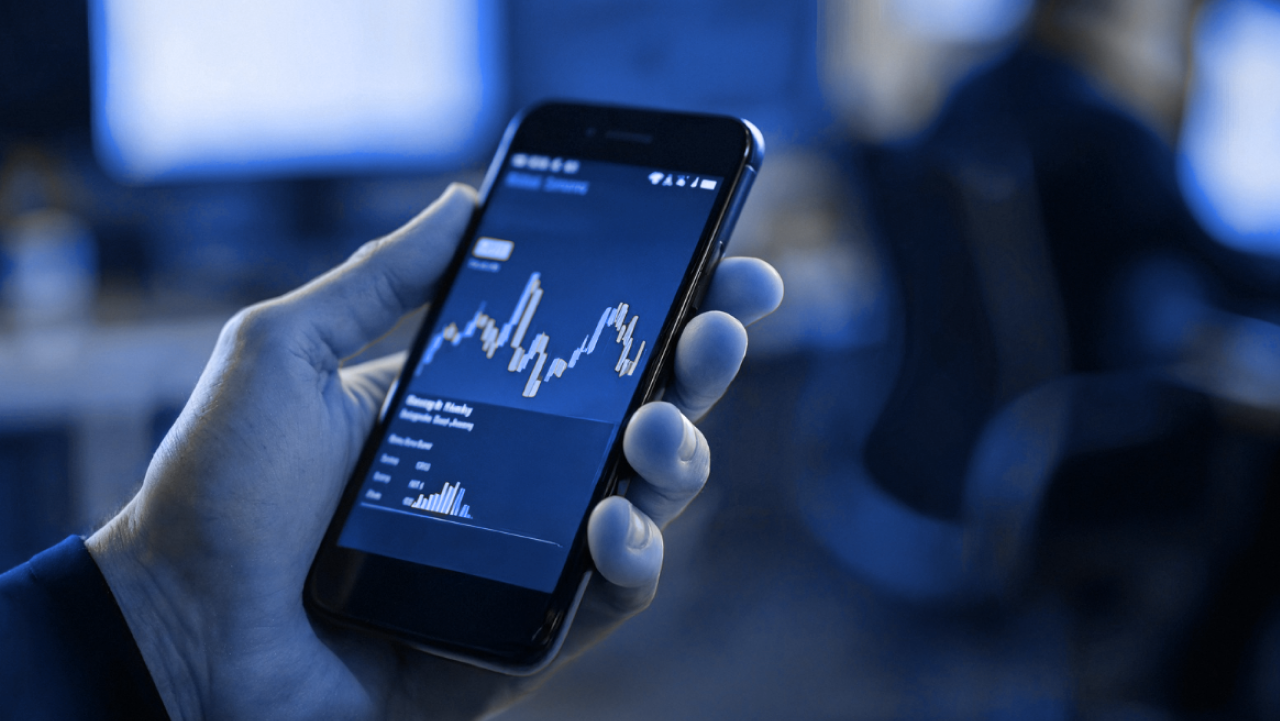
If you have ever wondered what is forex trading, you are already asking the right question. Most people hear about forex through a flashy reel or a friend who doubled their money in a week, and they jump in before they understand what they are actually doing. That is exactly how beginners lose money.
At Sky Elites, we teach forex the slow, honest way. So before you place a single trade, let us walk through what forex really is, how it works, and how a beginner can start without blowing up an account in the first month.
Forex, short for foreign exchange, is the global marketplace where currencies are bought and sold. Every time you travel abroad and swap your rupees for dollars, you have technically taken part in the forex market. Trading is simply doing this with the goal of profiting from the changes in exchange rates.
The scale is hard to imagine. According to the Bank for International Settlements, around 7.5 trillion dollars changes hands in the forex market every single day. That makes it the largest and most liquid financial market on the planet, far bigger than any stock exchange. For a clean textbook definition, Investopedia's forex overview is a solid reference to bookmark.
Here is the key idea that makes everything else click: in forex, you always trade one currency against another. You never buy a currency in isolation. This is why prices are quoted in pairs, such as EUR/USD (the euro against the US dollar) or XAU/USD (gold against the US dollar).
In every pair there is a base currency (the first one) and a quote currency (the second one). The price tells you how much of the quote currency you need to buy one unit of the base. If EUR/USD is trading at 1.10, it means one euro costs 1.10 US dollars. When you expect the base currency to strengthen, you buy. When you expect it to weaken, you sell. That is the entire foundation of how forex works, and once it clicks, charts stop looking like random noise.
Every field has its own vocabulary, and forex is no different. You only need three terms to begin.
Pips are the small unit that measures how much a price has moved. Your profit or loss is counted in pips.
Lots describe the size of your trade. A bigger lot means every pip is worth more money, in both directions.
Leverage lets you control a larger position with a smaller amount of capital. It can multiply gains, but it just as easily multiplies losses, which is why it is the number one reason beginners blow up.
Leverage deserves real respect. It is a powerful tool, not free money. If you want to understand it properly before you ever use it, this guide to forex leverage is worth ten minutes of your time. Free structured lessons like those on BabyPips are also excellent for drilling the basics.
Let us make it concrete. Imagine you study the chart and believe the euro will rise against the dollar. You buy EUR/USD at 1.1000. If the price climbs to 1.1050, that is a 50 pip move in your favour, and you close the trade in profit. If instead the price falls to 1.0950, you are 50 pips in the red, and a disciplined trader would have already exited at a planned stop level.
Notice what actually decided the outcome. It was not luck or a secret signal. It was whether your read on the market was correct and whether you managed the trade with a plan. That distinction between gambling and trading is the whole game, and it is the theme we return to again and again inside the Sky Elites Forex Mastery Course.
There is one more practical detail worth knowing early. Every trade has a small cost built in, usually the spread, which is the tiny difference between the buy and sell price. It is how brokers make money, and while it is small on any single trade, it adds up over many trades. Good beginners factor this in rather than ignoring it, because trading costs quietly eat into returns, especially for those who trade too frequently. Understanding this early keeps your expectations realistic and your trading efficient.
Forex is genuinely full of opportunity, but that same depth and leverage make it risky if you are careless. Brokers' own disclosures routinely show that a large majority of retail traders lose money, often cited somewhere between 70 and 90 percent. That statistic is not meant to scare you. It is meant to make you serious.
Almost all of those losses trace back to the same handful of habits: no system, no risk management, and emotional decisions. We break down exactly why this happens in our post on why most forex traders lose money. Reading it early could save you a lot of pain.
So how does a beginner go from curious to confident? Not by collecting tips, and not by copying strangers' buy and sell calls. You learn a repeatable process. You start with the basics, add structure and risk management, train your psychology, and only then practise on a demo account before risking real capital.
That is precisely the path we built at Sky Elites. Our Forex Mastery Course takes you from your first chart to a rule based trader, the Sky Edge Indicator supports your analysis, and our free community keeps you learning alongside people on the same journey.
When people talk about forex for beginners, they usually mean retail trading through an online broker. You open an account, download a trading platform such as MetaTrader 4 or 5, and buy or sell currency pairs from your phone or laptop. This is the most common route, and it is what most of the education online refers to.
There are other ways currencies are traded, including futures and options on regulated exchanges, and in India, currency derivatives are traded on recognised exchanges under the rules of SEBI and RBI. The mechanics differ slightly, but the core skill is the same everywhere: read the market, manage your risk, and follow a process. Whatever route you choose, make sure the broker or exchange is properly regulated in your region, because that protection matters more than any bonus or flashy platform.
One point often confuses beginners: you can profit whether a pair rises or falls, because you can buy or sell. If you expect the base currency to strengthen you buy, and if you expect it to weaken you sell. That flexibility is part of what makes forex appealing, and also why a clear directional read matters so much.
Here is a realistic picture of how a sensible beginner progresses. In the first few weeks, you focus entirely on understanding the basics and reading charts, with no money on the line. There is no rush, and there is certainly no prize for trading real capital before you are ready.
Next, you practise on a demo account until one simple approach feels repeatable and boring. Boring is good in trading. When your demo results are consistent over many trades rather than one lucky streak, you begin trading a very small live size, purely to learn how you handle real emotion. Only after that do you gradually scale. Notice that profit is never the first goal. Skill is, and the profit tends to follow the skill. We map this exact journey inside the Forex Mastery Course so you always know your next step.
None of this should feel overwhelming. Every professional trader was once a beginner staring at a chart that made no sense. The difference between those who make it and those who quit is rarely talent. It is patience and a willingness to learn properly instead of looking for a shortcut.
“An investment in knowledge pays the best interest.”
— Benjamin Franklin
Yes, as long as you treat it as a skill to learn rather than a lottery. Start with education, practice on a demo, and risk only what you can afford to lose.
You can start learning with almost nothing, and many brokers allow small live accounts. The bigger question is not how much money you have, but whether you have a tested process.
Becoming consistent is possible, but it takes structure, risk control and time. No one can guarantee profits, and anyone who does is not being honest with you.
Now that you can answer what is forex trading in your own words, you are already ahead of most beginners who trade first and learn later. Forex is a skill, and skills can be built. The traders who last are the ones who respect the risk, follow a process, and keep learning.
Risk disclosure: Sky Elites provides educational content and analytical tools only. We are not a SEBI registered investment adviser or a broker, and nothing here is investment, financial or trading advice or a buy or sell recommendation. Forex and leveraged products carry a high risk of loss and are not suitable for everyone. You can lose some or all of your capital. Any performance or accuracy figures refer to historical back testing and do not guarantee future results. Do your own research and trade only with money you can afford to lose.
By Sky elites Team | May 24, 2026
Read More →
By Sky elites Team | May 24, 2026
Read More →
By Sky elites Team | May 24, 2026
Read More →
By Sky elites Team | May 24, 2026
Read More →
By Sky elites Team | May 24, 2026
Read More →
By Sky elites Team | May 24, 2026
Read More →
By Sky elites Team | May 24, 2026
Read More →
By Sky elites Team | May 24, 2026
Read More →
By Sky elites Team | May 24, 2026
Read More →